Agile Best Practices: The Complete 2026 Guide to Delivering Faster with AI
A field-tested playbook for agile teams who want predictable delivery, healthy flow, and less time spent on planning rituals that don't move the needle.
Executive Summary
Agile best practices are not rituals for the sake of rituals. They are the specific, repeatable habits that help teams deliver working software faster with fewer surprises. In 2026, the best-performing agile teams combine timeless principles, such as WIP limits, continuous refinement, and retrospectives, with AI-powered forecasting and flow analytics to remove guesswork from planning.
This guide covers the practices that matter most: backlog refinement, sprint planning, WIP management, flow metrics, quality engineering, and team health. Each section includes real-world examples, a case study, and a practical tip you can apply in your next sprint. If you want a tool that automates many of these practices, FlowUpBoard generates backlogs, forecasts delivery dates, and enforces WIP limits out of the box.
1. Introduction: Why Agile Best Practices Still Matter in 2026
Twenty-five years after the Agile Manifesto, most teams say they are "doing agile." Fewer than a third describe themselves as truly agile. The gap is not in the manifesto. It is in the daily habits. Teams that consistently apply five or six core practices ship faster, with less overtime and fewer defects. Teams that adopt the ceremonies without the substance get the overhead without the benefit.
This guide distills the practices that separate high-performing agile teams from teams that are merely busy. Whether you run Scrum, Kanban, or a hybrid, the recommendations below apply across frameworks. For teams looking to accelerate, FlowUpBoard's built-in AI automates much of the planning work this guide describes.
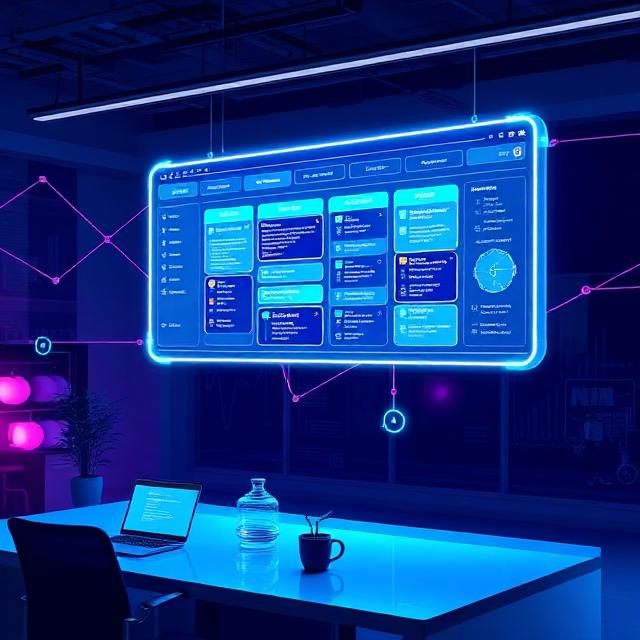
Figure 1: Agile best practices have evolved from manifesto principles to AI-augmented flow management.
2. What Are Agile Best Practices?
Agile best practices are the specific, repeatable habits that help software teams deliver working products in short cycles while maintaining quality and responding to change. They go beyond the four values of the Agile Manifesto and translate principles into daily, weekly, and sprint-level actions.
Core Definition
Agile best practices are time-tested techniques for planning, building, and delivering software in small, validated increments. They include backlog refinement, sprint planning, WIP limits, continuous integration, retrospectives, and flow measurement. When applied consistently, they reduce delivery risk, shorten cycle time, and improve team morale.
These practices are not framework-specific. A Scrum team and a Kanban team both benefit from disciplined backlog management, WIP limits, and retrospectives. The difference is in the cadence: Scrum applies them in timeboxed sprints, while Kanban applies them continuously.
3. Backlog Refinement: The Most Underused Practice
Backlog refinement is the single highest-leverage practice most teams skip. When the sprint starts with a poorly defined backlog, developers spend the first three to four days of every sprint debating scope, writing clarifications, and waiting for answers. That is lost velocity that never shows up in any metric.
How to Run Effective Refinement
- Time-box it: One to two sessions per week, 30 to 60 minutes each. Stop when the next sprint's stories are refined, not when the timer runs out.
- Define "ready" explicitly: A story is ready when it has a clear acceptance criteria, a rough size estimate, and no open questions blocking implementation.
- Involve the whole team: Developers spot technical risks earlier. QA spots testability gaps. Design spots UX issues. Refinement is not a product-owner monologue.
- Use AI to generate the first draft: FlowUpBoard's AI task generation creates structured backlog items from a one-line goal, so refinement starts at 70% done instead of zero.
Expert Tip
Track refinement ratio: the number of stories refined versus stories pulled into sprint. If your ratio drops below 1.2, your team will feel the pain in sprint planning. Keep one story refined for every 0.8 stories you plan to pull.
4. Sprint Planning That Actually Works
Sprint planning is where most teams waste the most time. A two-hour planning session should produce a sprint goal and a realistic commitment, not a two-hour argument about scope and estimation.
The Three-Step Planning Framework
- Step 1 — Set the goal (10 minutes): Product Owner states one clear sprint goal. Not a theme, not a direction. A single sentence: "Ship user authentication with SSO for the enterprise tier."
- Step 2 — Pull stories (30 minutes): Team pulls refined stories from the backlog that directly support the sprint goal. If stories are not refined, they do not enter the sprint.
- Step 3 — Validate capacity (20 minutes): Compare committed story points or task count against the team's historical velocity. If the commitment exceeds velocity by more than 10%, remove the lowest-priority item.
For AI-enhanced teams, FlowUpBoard runs Monte Carlo forecasting against historical throughput data before you commit, so the planning conversation starts with data, not gut feeling.
Watch Out
Never commit to stories that are not refined. "We will figure it out during the sprint" is the most expensive sentence in agile. It guarantees context switching, scope creep, and sprint failure.
5. WIP Limits: The Practice That Changes Everything
Work-in-Progress limits are the most powerful practice in agile, and the most frequently ignored. Every time a developer starts a second task before finishing the first, they pay a context-switching tax of 15 to 25 minutes. Across a six-person team with no WIP limits, that tax can consume 20% of sprint capacity.
How to Set and Tune WIP Limits
- Start with team size: A six-person team starts with WIP = 6 across the board, or 2 per developer in active columns.
- Observe cycle time: If cycle time is stable, keep the limit. If cycle time is climbing, reduce WIP by one to two items.
- Use per-column limits: Set tighter limits on bottleneck columns (e.g., Code Review, QA) and looser limits on upstream columns (e.g., Backlog, Ready).
- Automate enforcement: FlowUpBoard's AI dynamically adjusts WIP limits based on flow data, preventing bottlenecks before they form.
Figure 2: FlowUpBoard dynamically tightens WIP limits on bottleneck columns to restore flow.
6. Measuring What Matters: Flow Metrics Over Velocity
Velocity measures how many story points a team completes per sprint. It tells you almost nothing about whether the team is actually delivering value. Flow metrics tell the real story.
| Metric | What It Measures | Target Range | How to Improve |
|---|---|---|---|
| Cycle Time | Days from start to done | 1–5 days | Lower WIP, reduce handoffs |
| Throughput | Items completed per week | Stable trend | Remove blockers, refine better |
| Flow Efficiency | Active work time vs. wait time | 40–60% | Cut approval queues |
| WIP Count | Active items in progress | Team size or fewer | Enforce WIP limits |
| Age of WIP | How long items have been active | < 2x cycle time | Swarm on old items first |
| Forecast Accuracy | Monte Carlo 85th percentile | < 20% error | More data, tighter WIP |
Key Takeaway
Stop debating story points. Start measuring cycle time and throughput. These two numbers tell you more about delivery health than any sprint velocity trend chart. FlowUpBoard calculates all flow metrics automatically from board activity.
7. Retrospectives That Produce Action
The retrospective is where agile teams either improve or stagnate. Most retrospectives fail because they produce a long list of complaints with no owner, no deadline, and no follow-through. The fix is simple: fewer items, clearer owners, and a follow-up check at the next retro.
The 1-3-1 Retrospective Format
- 1 insight: What single thing did we learn this sprint about how we work?
- 3 problems: What three things slowed us down or caused rework?
- 1 experiment: What one change will we test in the next sprint?
After two to three sprints, review whether past experiments stuck. The teams that improve fastest are the ones that limit themselves to one experiment at a time and actually measure whether it worked.
Expert Tip
Use AI sprint summaries as your retro input. FlowUpBoard generates a summary of what shipped, what is blocked, and what slipped, so the retro conversation starts with facts, not feelings.
8. Quality Engineering Practices
Agile without quality practices produces fast garbage. The following engineering practices are non-negotiable for teams that want sustainable speed:
- Definition of Done: Every story must pass code review, automated tests, and documentation before it counts as done. No "Done but needs testing."
- Continuous Integration: Merge and test code at least once per day. Long-lived branches are the enemy of agile.
- Automated Testing: Unit tests, integration tests, and end-to-end tests run on every commit. Manual regression is not scalable.
- Pair Programming or Mob Programming: For complex features, two developers working together reduce defects by 30 to 50 percent compared to solo coding with review.
- Technical Debt Tracking: Treat tech debt as first-class backlog items. Allocate 15 to 20% of sprint capacity to debt reduction.
9. Team Practices for Sustainable Agile
The best process in the world fails if the team is burned out, misaligned, or working in silos. These practices keep the human side healthy:
- Limited WIP for people, not just work: No one should be on more than two active projects simultaneously. Split focus destroys deep work.
- Async-first communication: Replace status meetings with written updates and AI-generated board summaries. Save synchronous time for creative problem-solving.
- Cross-functional pairing: Developers and QA work together from story start, not at the end. Designers join refinement, not just handoff.
- Psychological safety: Retrospectives only work when people feel safe raising problems. Blameless postmortems build that safety.
- Sustainable pace: Overtime is a symptom of poor planning, not dedication. If the team regularly works late, the process is broken, not the people.
10. AI-Enhanced Agile: The 2026 Advantage
AI does not replace agile best practices. It makes them easier to sustain. The best agile teams in 2026 use AI to handle the mechanical work of planning, tracking, and reporting, so humans can focus on creative problem-solving and customer value.
| Practice | Traditional Approach | AI-Enhanced Approach |
|---|---|---|
| Backlog Grooming | Manual story writing, 3–5 hours/week | AI generates first draft in seconds |
| Estimation | Planning poker, subjective | Historical data-based sizing |
| Delivery Forecasting | Velocity-based, single number | Monte Carlo probability ranges |
| Bottleneck Detection | Manual board review | Real-time flow alerts |
| Sprint Reporting | Scrum master writes summary | AI-generated sprint summary |
| WIP Management | Static limits, manual enforcement | Dynamic limits based on flow data |
Tools like FlowUpBoard make this transition practical for small and mid-size teams. You type a goal, and AI generates a prioritized backlog, forecasts delivery dates using Monte Carlo simulation, and enforces WIP limits dynamically. The team's job shifts from writing tickets to making decisions.
11. 10 Best Practices Checklist
Use this checklist to audit your team's agile maturity. Each practice below is backed by industry data and the case studies in this guide.
- 1. Refine the backlog continuously. At least one refinement session per week. Never start a sprint with unrefined stories.
- 2. Set a clear sprint goal. One sentence. Every committed story must directly support it.
- 3. Enforce WIP limits. Team size or fewer active items. Lower limits on bottleneck columns.
- 4. Measure flow, not just velocity. Track cycle time, throughput, and flow efficiency as primary metrics.
- 5. Run blameless retrospectives. One experiment per retro. Follow up next sprint. Measure whether it stuck.
- 6. Maintain a strong Definition of Done. Code review, automated tests, documentation. No exceptions.
- 7. Automate repetitive work. CI/CD, automated testing, AI-generated reports. Stop doing by hand what the machine can do in seconds.
- 8. Protect deep work. Limit meetings. Replace status updates with async board summaries. Use the saved time for building.
- 9. Track flow efficiency. Items should spend more time being actively worked on than sitting in queues. Target 40 to 60%.
- 10. Use probabilistic forecasting. Monte Carlo simulations replace single-date commitments with confidence ranges. Stakeholders get better information.
Figure 3: Monte Carlo forecasting replaces single-date commitments with probabilistic delivery ranges.
12. Real-World Case Studies
These five teams applied the practices in this guide and measured the results over 60 to 90 days.
Case Study 1: NovaPay Fintech — Backlog Refinement Overhaul
Case Study 2: BrightPath SaaS — WIP Limit Enforcement
Case Study 3: CoreStack DevOps — AI Sprint Summaries
Case Study 4: MediTrack Healthcare — Monte Carlo Forecasting
Case Study 5: GreenRoute Logistics — Retrospective Transformation
13. Traditional vs. AI-Enhanced Agile: Side-by-Side
This comparison shows the measurable difference between teams that follow traditional agile practices and teams that add AI-powered tools to the same practices.
Figure 4: AI-enhanced agile systems integrate forecasting, flow analytics, and board management in a single architecture.
14. Implementation Roadmap: Where to Start
Do not try to adopt all ten best practices at once. Teams that improve fastest start with one or two high-impact practices and master them before adding more.
Week 1–2: Foundation
Enforce WIP limits on your board
Run one structured backlog refinement per week
Define a clear Definition of Done
Week 3–4: Measurement
Start tracking cycle time and throughput
Run a 1-3-1 retrospective format
Measure flow efficiency baseline
Month 2: Automation
Enable AI sprint summaries for reporting
Implement Monte Carlo forecasting
Automate CI/CD pipelines
Month 3+: Optimization
Tune WIP limits based on flow data
Expand AI backlog generation
Scale practices across teams
Expert Tip
The highest-ROI starting point for most teams is enforcing WIP limits. It costs nothing, requires no tooling change, and typically produces measurable cycle time improvement within two weeks. If you do nothing else from this guide, do this.
Figure 5: The five-stage autonomy roadmap from manual boards to AI-augmented agentic delivery.
15. Common Mistakes to Avoid
Even well-intentioned teams fall into these patterns. Knowing them makes them easier to escape.
- Ceremony theater: Running standups, retros, and planning without understanding why. If a ceremony does not produce a decision or an action item, it is a meeting, not a practice.
- Velocity as performance metric: Comparing velocity across teams or using it for individual performance reviews destroys trust and inflates estimates.
- Skipping refinement to "save time": The time you save in refinement is multiplied in sprint planning, mid-sprint clarifications, and rework.
- Ignoring WIP limits when busy: The moment you need WIP limits most is the moment you are tempted to break them. That is exactly when to hold firm.
- Action items without owners: A retrospective action item without an owner and a deadline is a wish, not a commitment.
- Big-bang agile transformations: Adopting all Scrum practices on Monday morning overwhelms teams. Start with two practices, master them, then add more.
Common Mistake
The biggest mistake teams make is adopting agile ceremonies without adopting agile engineering practices. You can run perfect standups and still ship broken software. The practices in sections 5 through 8 of this guide are what make agile actually deliver.
16. Frequently Asked Questions
17. Conclusion
Agile best practices are not about doing more. They are about doing the right things consistently. The teams that ship predictably in 2026 share a common trait: they measure flow instead of activity, they refine before they plan, they limit work in progress instead of maximizing utilization, and they use AI to handle the mechanical work so humans can focus on creative problem-solving.
Start with one practice from this guide. Enforce WIP limits this week. Run a structured refinement next week. Measure cycle time the week after. Build momentum through small wins, not big transformations. And when you are ready to automate the mechanical work, FlowUpBoard is free for unlimited boards, members, and AI features.
Ship Agile Best Practices Without the Overhead
FlowUpBoard generates your backlog, forecasts delivery with Monte Carlo, enforces WIP limits, and writes your sprint summaries. Unlimited boards and members at $0.
Start Your Free Trial